Date: 27 July 2023, Time: 12 noon CEST
Duration: 1:55 hours
Abstract:
Post-harvest food losses remain very high in developing countries, estimated at about 50% on average for perishable produce, despite the resolution of the United Nations General Assembly in New York in 1975 calling for at least a 50% reduction by 1985, which was not attained in most developing countries. Small, resource-poor farmers account for the bulk of food production in developing countries and high post-harvest food losses discourage production, impoverish farmers, reduce food availability, promote food insecurity and constrain rural development. Improper harvesting and post-harvest handling practices, poor infrastructure, lack of efficient food storage and processing facilities, weak supply chains, and lack of information that limit access to local, regional and international markets for smallholder farmers contribute to high post-harvest food losses in developing countries. Education, capacity building, improved harvesting and post-harvest handling practices, better infrastructure, the use of digital technology to improve market access for smallholder farmers, village level processing, empowering women who are largely responsible for most food processing activities, and other practical and workable systems and strategies for reducing post-harvest food losses in developing countries are discussed.
This webinar is hosted by the GHI Reducing Post-Harvest Losses Working Group. The Groups overall mission is to identify technologies and procedures to reduce food loss and food waste around the globe, and to identify those technologies and procedures that are appropriate to be proposed for harmonized regulations.
This GHI webinar and interactive sessions, will be chaired by Dr. Diana Bogueva, Director of GHI Working Groups
Reducing post-harvest losses in fresh produce in developing tropical countries with special reference to Sub-Saharan Africa
Dr. Ogugua Charles Aworh is a Board Director of the Global Harmonization Initiative and a Retired George Coumantaros Distinguished Professor, Department of Food Technology, University of Ibadan, Nigeria
Abstract:
The tropical environment characterized by high temperature and humidity, and a high incidence of pests and diseases aggravates post-harvest losses of fruits and vegetables on account of their high moisture content, high rate of metabolic activities including respiration, and soft tissue that predispose them to physical damage (abrasions, cuts, bruises, deformation, invisible wounds), biological damage caused by bacteria, fungi and insects, and physiological damage due to changes caused by respiration, ripening, senescence and sprouting that impair quality, cause spoilage and limit their post-harvest life. Post-harvest losses in fresh produce in developing tropical countries, where small, resource-poor farmers account for the bulk of food production, is estimated at about 50% on average, but could be much higher, depending on the circumstances, as they are time dependent and location specific. High post-harvest food losses in developing countries is detrimental to food production, livelihoods, food security and rural development. This presentation highlights workable, practical strategies, intervention measures and appropriate technologies for reducing post-harvest losses in tropical and sub-tropical fruits and vegetables in developing countries with special reference to sub-Saharan Africa including advocacy, education and capacity building; adoption of good agricultural practices, good hygienic practices, improved harvesting methods, improved post-harvest handling practices and market preparatory or packinghouse operations; provision of improved infrastructure, transport and market conditions; strengthening supply chains and the use of digital technology to bridge information gap and improve market access for smallholder farmers.
Enterprise Skills Development in Village Level Food Processing for Food Security and Accessibility for all
Dr. Alastair Hicks is an elected Life Fellow of the International Academy of Food Science and Technology FIAFoST, for which he was Councilor of the Academy Executive Committee AEC.
Abstract:
This talk discusses an initiative in rural enterprise development and crop diversification activities specifically in the CLMV region – Cambodia, Laos, Myanmar, and Vietnam. The objective is to promote enterprise skills development in village level food processing, and to provide food security and accessibility for all, through poverty reduction and empowerment of vulnerable groups. The approach consists of the following steps:
• Training national focal persons to then train villagers in small-scale food processing activities, with skills needed to stimulate and sustain rural enterprises.
• Applying food science and technology to add value to crops postharvest, upgrading traditional food products to enter local then regional markets including tourism.
• Developing safe, hygienic practices for traditional food products, extending their shelf life with improved suitable packaging and supply chains.
• Establishing provincial and national food pilot plants to train food enterprise operators and villagers in the above, through Success Case Replication.
The challenges, activities, outcomes and next steps will be outlined during this presentation.
Comprehensive plan to reduce post harvest food loss and waste
Dr. Kenneth Marsh is Chair of the GHI Post-Harvest Losses working group and Executive Director of the Woodstock Institute for Science & the Humanities in Clemson, South Carolina, US, a not-for-profit organization working to reduce world hunger by cutting food losses.
Abstract:
Global food production is sufficient to feed everyone on earth but a significant portion of food is lost at every stage of production and after harvest. The presenter estimates that recovering 20% of current losses would yield sufficient food to feed everyone if political will was sufficient to do so. This seminar presents a comprehensive approach to reducing food loss that includes the more detailed approaches already presented by Drs. Aworh and Hicks that apply to the developing world and adds approaches to reducing food waste primarily in so-called developed countries. The comprehensive plan includes reducing food losses through international cooperation, infrastructure investment and development, Village Level Food Processing, harmonizing food regulations (GHI), building political will and reducing food waste.
Speaker 1:
Dr. Ogugua Charles Aworh
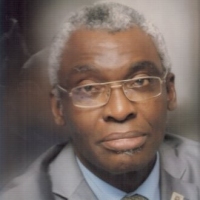 Dr. Ogugua Charles Aworh is a retired George Coumantaros Distinguished Professor, Department of Food Technology, University of Ibadan (UI), Nigeria; President of the International Academy of Food Science and Technology (IAFoST); Fellow of the African Academy of Sciences (AAS); and Chairman of the Technical Advisory Group of Nigeria’s Tertiary Education Trust Fund (TETFund). He obtained B.Sc. (Hons) from UI (1973); MS (1976) and Ph.D. (1978) in Food Science and Technology from Cornell University, USA. He is a recipient of the Lifetime Achievement Award of the Nigerian Institute of Food Science and Technology (NIFST), former Chairman of NIFST Body of Fellows (2008-2013), pioneer Chairman of the Multidisciplinary Central Research Laboratory, UI, (2008-2014), and served three-terms as Head of Department of Food Technology, UI. A recipient of several prestigious international research fellowships including the Royal Society/Nuffield Foundation Fellowship, the Canadian International Development Agency/Natural Sciences and Engineering Research Council Fellowship and the Alexander von Humboldt Research Fellowship, Professor Aworh was at various times visiting Research Fellow/Professor at: the Procter Department of Food Science, University of Leeds, UK; the Department of Food Science, University of British Columbia, Vancouver, Canada; and the Department of Biotechnology and the Institute of Technical Biocatalysis, Hamburg University of Technology, Germany. Professor Aworh has world-wide experience in food research, consultancy and public service and was a full-time consultant in sustainable community development to Shell Petroleum Development Company of Nigeria Limited, Warri (1999-2000). He is currently a mentor for African Women in Agricultural Research and Development (AWARD) and for the International Union of Food Science and Technology (IUFoST) young scientists.
Speaker 2:
Dr. Alastair Hicks
 Dr. Hicks joined The Food and Agricultural Organization of the United Nations (FAO of UN) in 1984 at the FAO headquarters in Rome, Italy as a Food Industries Officer for 3 years; then as Senior Regional Agroindustry and Postharvest Officer, in the FAO Regional Office for Asia and the Pacific, Thailand, where he worked for 20 years. His terms of reference were the provision of policy and technical advice on Agroindustries and Postharvest management, to FAO member governments of forty seven (47) countries in the Asia -Pacific Region. He reported on 150+ country missions for FAO/UN globally and technically backstopped over $20m worth in projects. He has published 200+ technical papers/articles on food/agroindustry, and on postharvest management of food systems. After retirement his continuing professional interests have been international food consultancy and tertiary education; as adjunct professor/visiting academic within ASEAN. Earlier he was a visiting fellow to the University of the South Pacific, Samoa; an expert food engineer at Kasetsart University, Thailand; and a lecturer at the University of Western Sydney (UWS); he had also worked for multinational food industry companies, H.J. Heinz (London) and Unilever (Sydney), in food industry management, food process engineering, food and edible oils product and process development. Dr. Alastair Hicks is an elected Life Fellow of the Australian Institute of Food Science and Technology FAIFST, also of the International Academy of Food Science and Technology FIAFoST, which he was Councilor of the Academy Executive Committee AEC for two terms.
Speaker 3:
Dr. Kenneth Marsh
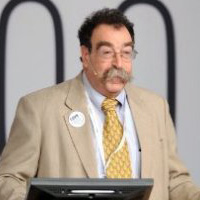 Dr. Marsh is Executive Director of the Woodstock Institute for Science & the Humanities in South Carolina, US, a not-for-profit organization working to reduce world hunger by cutting food losses since 1992. He was awarded the 2015 Elisabeth Fleming Stier Award for humanitarian contributions for that work. He held the first endowed professorship in packaging science in the US and is a Fellow of the International Academy of Food Science & Technology, Institute of Packaging Professionals and the Institute of Food Technologists, a Lifetime Certified Packaging Professional and Certified Food Scientist. He co-edited the Wiley Encyclopedia of Packaging Technology, 2nd edition and authored two Scientific Status Summaries on packaging and the environment. Dr. Marsh presented aspects of packaging and food security at 8 World Food Congresses, 2 World Packaging Congresses, 1st Save Food Congress, and other forums. He was a delegate at the World Food Summit: five years later. He helped develop High-Energy, Nutrient-Dense Emergency Relief Food Product with a subcommittee of the Institute of Medicine, National Academy of Sciences.
Chair & Event Moderator:
Dr. Diana Bogueva
 Dr. Diana Bogueva, GHI Working Groups Director is a social scientist with interests in sustainable food consumption, alternative proteins, consumer perception of novel food processing technologies and generational consumer behaviour, food sustainability and harmonization. Diana’s work has won three awards: the Australian National Best Book winner in 2019 and the World’s Best Book award 2020 in the Vegetarian book category at the prestigious 24th and 25th Gourmand Awards, considered equivalent to the Oscars in the area of food books, for her co-edited book ‘Environmental, Health and Business Opportunities in the New Meat Alternatives Market’. She also won the 2020 Faculty of Humanities Journal Article of the Year Award at Curtin University for their co-authored paper “Planetary Health and reduction in meat consumption”, which was at the top 5% of all world research outputs scored by Altmetrics. Diana is also a finalist in the 10th International Book Award at America’s Book Fair 2019 for her co-edited book ‘Handbook of Research on Social marketing and its influence on animal origin food product consumption’. In 2022 Diana published her first co-authored book ‘Food in a Planetary Emergency’ with Professor Dora Marinova. This book is a timely overview of current food systems and the required transformations to respond to climate change, population pressures, biodiversity loss and use of natural resources. And, in May 2023, as a tribute to the authors’ efforts, talented writing skills and passion, ‘Food in a Planetary Emergency’ was awarded the ‘Best of the Best – The Future of Food Gourmand Award’ at the 28th Award Ceremony.
Online attendance at GHI webinars is free, however, to help the Global Harmonization Initiative (a non-profit organisation run by volunteers) to continue to fund free events like this please consider making a donation. A suggested donation is Euro 10, for more information visit: https://www.globalharmonization.net/donate
For details about the upcoming GHI webinar series and to catch-up with videos of past webinars go to https://www.globalharmonization.net/news-and-events/ghi-webinars/