
Chair
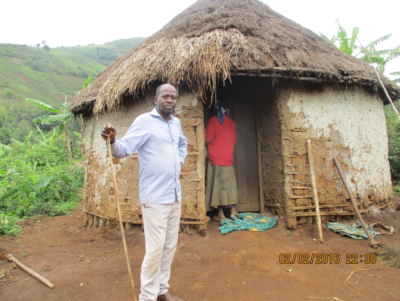
Aaron Kalala visiting very poor indigenous woman living now around Kahuzi Biega National Park after been expulsed from the park become world patrimonial
Aaron Kalala Karumba is the founder and Executive Director of the Association Paysanne pour l’Autosuffisance Alimentaire. Born and raised in the Democratic Republic of Congo to a family of poor farmers, he has dedicated his life to improving the livelihoods of rural communities. He holds a degree in Rural Economy and Development and was certified as a permaculture trainer in 2007 by world‑renowned educator Geoff Lawton in Tanzania.
Aaron has been training farmers since 1998, sharing practical, sustainable agricultural skills with thousands of people across the region. He currently serves as the GHI Ambassador for the DR Congo and the Project Manager of the GHI Food Safety Club–DR Congo.
Deeply passionate about supporting vulnerable rural families – especially women farmers – Aaron works to combat malnutrition and poverty by teaching innovative agricultural approaches such as permaculture, enabling communities to grow safe, abundant food without harming the environment.
We are currently running our training courses at Institut Kakamba, a secondary school located in Uvira, Sud Kivu, in the Democratic Republic of Congo.
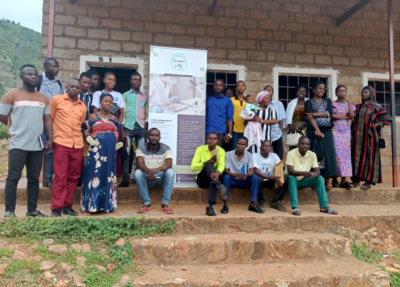
Family photo of first cohort of FSC- DR Congo
Our GHI Food Safety Club is committed to training communities – especially young women and girls – in food security and nutrition. The DR Congo remains one of the countries most severely affected by malnutrition, which continues to be a leading cause of death, particularly among children. Through our work, we have seen that one of the most effective solutions is to educate, train, and sensitize communities on proper nutrition and safe food practices.
This program began in 2025 with initial support from GHI. Our first cohort included 36 participants who completed a four-month training program, with an assessment and after which certificates were awarded to all laureates.
To expand our impact, we urgently need support to reach additional villages and neighborhoods in Uvira, where many families still lack access to reliable nutrition education and food safety knowledge.
Mission
The GHI Food Safety Club’s aims to build strong understanding of food safety and related food issues among school children and young consumers. It promotes best practices in food hygiene, safe food handling, consumer awareness, and regulatory understanding. Through education and community engagement, the Club supports the broader goals of the Global Harmonization Initiative by advancing food safety awareness, education, advocacy, harmonized practices, and strengthening grassroots consumer protection.
Our GHI Food Safety Club is committed to training communities – especially young women and girls – in food security and nutrition. The DR Congo remains one of the countries most severely affected by malnutrition, which continues to be a leading cause of death, particularly among children. Through our work, we have seen that one of the most effective solutions is to educate, train, and sensitize communities on proper nutrition and safe food practices.
This program began in 2025 with initial support from GHI. Our first cohort included 36 participants who completed a four-month training program, with an assessment and after which certificates were awarded to all laureates.
To expand our impact, we urgently need support to reach additional villages and neighborhoods in Uvira, where many families still lack access to reliable nutrition education and food safety knowledge.
Objectives
The GHI Food Safety Club brings together students, educators, food industry professionals, and community stakeholders to strengthen food safety knowledge and promote food safety education and encourage responsible food practices. Its focus areas include:
The Club focuses on the following areas:
- Food safety
- Food hygiene and safe handling practices
- Consumer education and awareness
- Food labelling and regulatory understanding
- Prevention of food fraud
- Youth engagement in food safety advocacy
- Industry exposure and experiential learning
- Celebration of World Food Safety Day
- Academic and research-driven food safety initiatives
The Clubs work to:
- Share key food safety messages with students and the wider community.
- Provide a platform for promoting good hygiene and safe food handling practices within schools.
- Organize annual World Food Safety Day celebrations and activities to raise awareness.
- Host Food Safety Quiz Competitions to encourage student learning and participation
- Arrange and organize educational visits to food industries to demonstrate to students practical, real world food safety systems.
- Support local agri-food entrepreneurs in understanding food labelling regulations and requirements and preventing food fraud.
- Promote accountability among food business operators regarding food quality and safety.
- Establish additional Food Safety Clubs in more educational institutions within the region and globally.
- Bridge knowledge gaps between food producers and consumers (e.g., students can see, touch, ask, and explain real food system practices).
- Advocate for stronger food safety legislation and regulatory enforcement.
- Strengthen grassroots capacity building for ready-to-eat food vendors, chefs, street food sellers, slaughterhouse operators, and butchers.
- Collaborate with Global Harmonization Initiative professionals to develop evidence-based food safety initiatives.
- Encourage youth involvement and participation in research, innovation, and long-term food safety development.
Meetings
Club meetings are held periodically (weekly) throughout the year.
Special meetings and activities take place during major events such as World Food Safety Day, quiz competitions, and industry excursions.
Contact
Aaron Kalala Karumba, WA +243813608140, E: apaacongo@gmail.com