Date: 26 Sept 2022, Time: 2pm CEST
Duration: 1.5 hours
Abstract:
The more we look the more we see. The tremendous developments in microscopic and cell culture techniques over the past 10 years have shown us more and more that we are never alone. We are surrounded by billions of microbes of all kinds, fungi, yeasts, viruses and bacteria. These microbes live together in groups on our skin, in our mouth, the genital tract and most of all in our intestines.
Modern “omics” techniques allow us to identify the genes specific to each group of microbes and thus identify the microbiomes (all the genes) and the microbiota (all the microbes that contain those genes) in the different bodily environments. This gives a huge amount of data that we can properly store and analyse with modern informatics techniques. Defining healthy microbiomes, preventing disease, fighting disease, keeping our food and environment healthy, these are the challenges we face today.
The mission of the GHI Food Microbiology Working Group is to strive for evidence-based and rational harmonization of criteria, regulations and legislation relevant to the microbiology of foods. The current webinar will focus on specific challenges in microbial food safety and quality that can be affected by microbiomes.
This GHI webinar and interactive sessions, will be expertly chaired by Dr. Diana Bogueva, GHI Working Groups Director.
Microbes, microbiota and microbiomes; their role in humans, animals, plants and the environment.
Dr. Stanley Brul, is Professor of Molecular Biology and Microbial Food Safety, Swammerdam Institute for Life Sciences, University of Amsterdam, NL and Co-Chair of the GHI Food Microbiology Working Group.
Abstract:
Microbes are everywhere in the surroundings. They are the most ancient living systems on earth and have since long established a mostly mutually beneficial relationship with humans, animals, plants and other microbes occurring in special environmental niches. The question arises, who are these microbes and what are their functions, are there common elements between human, animal, plant and environmental microbial consortia and how do we analyse these complex microbiota and their encaged microbiomes. The session will discuss the composition of the various sites of microbial occurrence and indicate also what happens if a less preferred, generally non stable, state is established in these niches. Inflammatory disorders and/or microbial infection ensues associated with pathogenic function, antibiotic resistance and often food-safety. The seminar will discuss the options that can be explored to study host-microbe interaction starting with cohort analyses and linked bioinformatic tools. We will also address how microbes move throughout the holomicrobiome and what the current state of the art is in in vitro gut-on-a-chip systems to study host-microbe interaction. The models discussed will be introduced from a functional perspective as well as the compounds that are being seen as important mediators of the interaction between the microbes and their hosts.
The Microbiome from a Food Safety Point of View
Dr. Rozita Spirovska Vaskoska, Senior Scientist at the Australian national science institute CSIRO
Abstract:
Rozita Vaskoska will further discuss the microbiome from a food safety point of view. From the perspective of food safety, the microbiome is a diverse concept that includes the gut microbiome of food producing animals, plants, food, the environmental microbiome and the human microbiome. This presentation will provide an overview of the findings for each of these microbiome concepts, the role they play in food safety, as well as the benefit of microbiome tests and findings for predicting or controlling risks in the food chain. The presentation will conclude with a case study on the use of bacteriophages as food safety control measures in the context of the microbiome.
Speaker 1:
Prof. Dr. Stanley Brul
 Stanley Brul, Ph.D. is Professor of Molecular Biology and Microbial Food Safety, Swammerdam Institute for Life Sciences, University of Amsterdam, NL. Prof. Dr. Stanley Brul holds a chair in Molecular Biology and Microbial Food Safety at the University of Amsterdam (UvA). He is director of the College of Life Sciences at the UvA, which organizes the university’s undergraduate Biology, Psychobiology and Biomedical Sciences programs. In the master he coordinates the track Medical Biochemistry and Biotechnology, and supervised numerous MSc graduates as well as 27 PhD students to the completion of their doctorate. Stanley Brul published ~200 papers and has an H-index of 53. He chaired many Life Sciences education evaluation committees and was on many research evaluation committees nationally and internationally. Currently Prof. Brul is a member of the Dutch Biology Council and spearheads the national investment (sector)plan Biology from the Dutch Biology Council https://www.raadvoordebiologie.nl/en/. His recent research centres on the behaviour of microbial species in complex environments most specifically the oral and gut microbiome with their associated microbiota. The research group at the Swammerdam Institute for Life Sciences boast many collaborations, with basic scientist enabling complex data analysis and live imaging approaches, as well as groups at the Amsterdam Medical Centres. In a clinical context focus is on Early Infant Development, Inflammatory Bowel Disease, Neurological Disorders including Major Depressive Disorder and Infectious disorders of the digestive tract. Stanley is a co-chair of the GHI Food Microbiology Working Group .
Speaker 2:
Dr. Rozita Spirovska Vaskoska
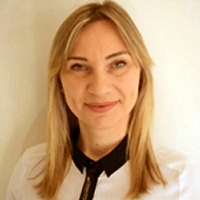 Dr. Rozita Spirovska Vaskoska is a Senior Scientist at the Australian national science institute CSIRO. She holds a PhD degree from the University of Melbourne and a MSc degree from Wageningen University in the area of food science. Rozita has numerous publications and a research interest in the areas of food microbiology, food safety, meat science and food law. Her experience spans across academic institutions, consultancy and industry. Rozita is a co-chair of the GHI Food Microbiology Working Group
.
Chair & Event Moderator:
Dr. Diana Bogueva
 Dr. Diana Bogueva, GHI Working Groups Director is a social scientist with interests in sustainable food consumption, alternative proteins, consumer perception of novel food processing technologies and generational consumer behaviour, food sustainability and harmonization. Diana’s work has won three awards: the Australian National Best Book winner in 2019 and the World’s Best Book award 2020 in the Vegetarian book category at the prestigious 24th and 25th Gourmand Awards, considered equivalent to the Oscars in the area of food books, for her co-edited book ‘Environmental, Health and Business Opportunities in the New Meat Alternatives Market’. She also won the 2020 Faculty of Humanities Journal Article of the Year Award at Curtin University for their co-authored paper “Planetary Health and reduction in meat consumption”, which was at the top 5% of all world research outputs scored by Altmetrics. Diana is also a finalist in the 10th International Book Award at America’s Book Fair 2019 for her co-edited book ‘Handbook of Research on Social marketing and its influence on animal origin food product consumption’. In 2022 Diana published her first co-authored book ‘Food in a Planetary Emergency’ with Professor Dora Marinova. This book is a timely overview of current food systems and the required transformations to respond to climate change, population pressures, biodiversity loss and use of natural resources.