Date: 10 Nov 2022, Time:12 noon CET
Duration: 1:45 hours
Abstract:
World food production is adequate to feed everyone on earth, but the United Nations Food and Agriculture Organization (FAO) has estimated that 1/3 of that food production is lost or wasted. Food is lost at every stage of the food supply chain, from initial agricultural production through to final consumption. Although the 1/3 figure is relatively consistent, worldwide, the mechanism of food losses differs between medium and high-income countries and low-income nations. Food losses in low-income countries tends to be early in the supply chain due to limitations in transportation and storage, while losses in high-income countries tends to be more food waste, when edible food is discarded by the final consumer (households, restaurants and food service). The term food losses can include all losses or relate to supply chain losses; food waste is defined as discard of edible food.
This GHI webinar is organised by the GHI Post-Harvest Losses working group and will be chaired by Dr. Diana Bogueva who is GHI Working Groups Director.
Food Is Never Waste: A Wake up Call to Alleviate Food Insecurity in the Arab World
Professor Dr. Hussein F. Hassan, Department of Natural Sciences, Lebanese American University, Lebanon
Abstract:
According to the United Nations Environment Programme, more than a third of food produced worldwide is wasted. This amount of wastage is enough to feed 2 billion people, while more than 800 million people in the world are hungry. On the consumption level, 61% of food waste takes place in households, 26% in the hospitality sector, and 13% in retail markets. Understanding attitudes and behaviours towards food waste among different stakeholders, in addition to quantifying and characterizing it, is key to address the food waste problem as this is required to establish a baseline, which is highly needed for effective interventions. In the Arab World, only one country, Saudi Arabia, has developed such a baseline. In our presentation, facts and figures on food waste in the Arab World, along with regulations and initiatives on the topic are presented, along with recommendations and take-home messages to mitigate the generation of food waste.
Reducing Post-Harvest Food Losses in the Supply Chain and a Program to Reduce Food Waste at its End
Dr. Kenneth Marsh is Chair of the GHI Post-Harvest Losses working group and Executive Director of the Woodstock Institute for Science & the Humanities in Clemson, South Carolina, US, a not-for-profit organization working to reduce world hunger by cutting food losses.
Abstract:
Reducing Post-Harvest Food Losses: Food losses occur throughout the supply chain and are exacerbated by limitations in that supply chain. Many so-called Less Developed Countries (LDC) have recognized this problem and created institutes to reduce these losses. These institutes create appropriate means to reduce food losses but vary greatly in their participation in UN language scientific media and international conferences, so many of these developments remain in their country-of-origin. Cooperation and exchange of already developed technologies would be a cost-effective way to utilize more of total food production This webinar hosted by the GHI Post-Harvest Losses working group will explore how to promote international exchange of post-harvest technologies in a culturally appropriate manner, with the aid of food and packaging experts willing to volunteer their time to help.
Reducing Food Waste: In countries with sophisticated distribution systems, primarily North America and the European Union, food loss is primarily food waste. Reducing food waste requires a new way of thinking. A system will be proposed that requires people and institutions to discard food waste in a manner that allows the nutrients to be utilized while making the quantity of that waste more visible. A municipality willing to pilot the concept will require that all food waste, ideally household and commercial, be discarded in reusable or biodegradable containers that will be sold and collected by the municipality and converted to compost that could be used by the city and its residents.. As volumes of food waste become recognized, food waste should reduce with savings to both city and residents.
Food Processing and Packaging for Shelf-life Extension and Waste Reduction
Professor Dr. Theofania Tsironi from the Agricultural University of Athens, Greece and Co-chair of the GHI Post-Harvest Losses working group.
Abstract:
Large amounts of food are wasted in the food supply chain. It has been estimated that more than 30% of the produced food is annually discarded. An important cause of food waste is expiring “best-before-date” at the consumer level. The spoilage mechanism, which defines the quality deterioration rate and shelf life of a food product, depends mainly on food composition, treatment, packaging and storage conditions. Nowadays, the development of new food processing and packaging methods or novel combinations of existing technologies shows the potential to achieve shelf life extension of food products, improve management and reduce food waste. Since temperature is one of the most important factors influencing microbial growth and quality parameters, the temperature fluctuations that occur during food transportation and storage before delivery to the consumer can affect significantly food quality and shelf life. Thus the effective control of the cold chain and quality monitoring of food at any stage of the supply chain may result in shelf life management and extension. Developing novel and efficient packaging solutions to improve food quality and shelf life and reduce food waste while not raising the amount of packaging waste is a major challenge during improving the sustainability of food supply chains.
Speaker 1:
Professor Dr. Hussein Hassan
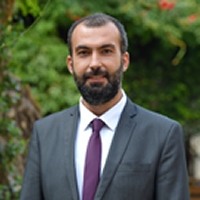 Dr. Hussein Hassan is the director of academic compliance, and associate professor of Food Science and Technology at the Lebanese American University in Lebanon. He received his BSc and MSc in Food Technology from the American University of Beirut and his PhD in Food Process Engineering from McGill University, Canada. Dr. Hassan’s research interests revolve around the area of non-microbial food safety, food toxicology, food processing, and food waste. Dr. Hassan’s research has been published so far in more than 50 articles in top-tier journals. In addition, Dr. Hassan is a senior expert and consultant with local and international entities, including the Lebanese Ministry of Economy, Ministry of Industry, and Ministry of Public Health, in addition to USAID projects (LIVCD, ARE, LINQ and TIF), UN’s Food and Agriculture Organization (FAO), United Nations Environment Programme (UNEP), United Nations Development Programme (UNDP), United Nations Economic and Social Commission for Western Asia (ESCWA), Save the children, Mercy Corps, among others.
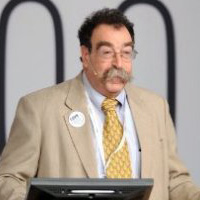 Dr. Marsh is Executive Director of the Woodstock Institute for Science & the Humanities in South Carolina, US, a not-for-profit organization working to reduce world hunger by cutting food losses since 1992. He was awarded the 2015 Elisabeth Fleming Stier Award for humanitarian contributions for that work. He held the first endowed professorship in packaging science in the US and is a Fellow of the International Academy of Food Science & Technology, Institute of Packaging Professionals and the Institute of Food Technologists, a Lifetime Certified Packaging Professional and Certified Food Scientist. He co-edited the Wiley Encyclopedia of Packaging Technology, 2nd edition and authored two Scientific Status Summaries on packaging and the environment. Dr. Marsh presented aspects of packaging and food security at 8 World Food Congresses, 2 World Packaging Congresses, 1st Save Food Congress, and other forums. He was a delegate at the World Food Summit: five years later. He helped develop High-Energy, Nutrient-Dense Emergency Relief Food Product with a subcommittee of the Institute of Medicine, National Academy of Sciences.
Speaker 3:
Assistant Professor Dr. Theofania Tsironi
 Dr. Theofania Tsironi holds a Diploma in Chemical Engineering and a PhD in Food Engineering from the National Technical University of Athens and Master of Public Health from the National School of Public Health (Greece). Her principal research is in the fields of food packaging, quality and shelf life modelling of chilled and frozen food (mainly seafood), predictive microbiology, nonthermal processing, active packaging and cold chain management by application of smart labels. She has been serving as member of the Early Career Researcher (ECR) Board of the Packaging Technology and Science (Wiley) and as Associate Editor-in-Chief of the Aquaculture and Fisheries (Elsevier). Results of her research have been published in 56 peer reviewed journals, 7 book chapters and 140 scientific conference proceedings (h-index 19, Scopus, August 2022).
Chair & Event Moderator:
Dr. Diana Bogueva
 Dr. Diana Bogueva, GHI Working Groups Director is a social scientist with interests in sustainable food consumption, alternative proteins, consumer perception of novel food processing technologies and generational consumer behaviour, food sustainability and harmonization. Diana’s work has won three awards: the Australian National Best Book winner in 2019 and the World’s Best Book award 2020 in the Vegetarian book category at the prestigious 24th and 25th Gourmand Awards, considered equivalent to the Oscars in the area of food books, for her co-edited book ‘Environmental, Health and Business Opportunities in the New Meat Alternatives Market’. She also won the 2020 Faculty of Humanities Journal Article of the Year Award at Curtin University for their co-authored paper “Planetary Health and reduction in meat consumption”, which was at the top 5% of all world research outputs scored by Altmetrics. Diana is also a finalist in the 10th International Book Award at America’s Book Fair 2019 for her co-edited book ‘Handbook of Research on Social marketing and its influence on animal origin food product consumption’. In 2022 Diana published her first co-authored book ‘Food in a Planetary Emergency’ with Professor Dora Marinova. This book is a timely overview of current food systems and the required transformations to respond to climate change, population pressures, biodiversity loss and use of natural resources.